

As part of the expanding network of global academic partnerships, particularly the BRIDGE project, the Ukrainian Catholic University (UCU) and the Universidad Católica de Manizales (UCM) have launched an innovative COIL course titled “Bridging Cultures Through English.” Designed by Halyna Kurochka and Juan Carlos Vinasco, the course aims to strengthen intercultural dialogue by bringing together students from both universities in a shared English-learning environment.
This collaborative course explores a wide range of themes essential to the language-learning process — values and beliefs, cross-cultural communication, language and norms, art, music, literature, religion, and traditions. Through this multicultural lens, students not only enhance their English skills but also gain deeper insight into each other’s cultural worlds.
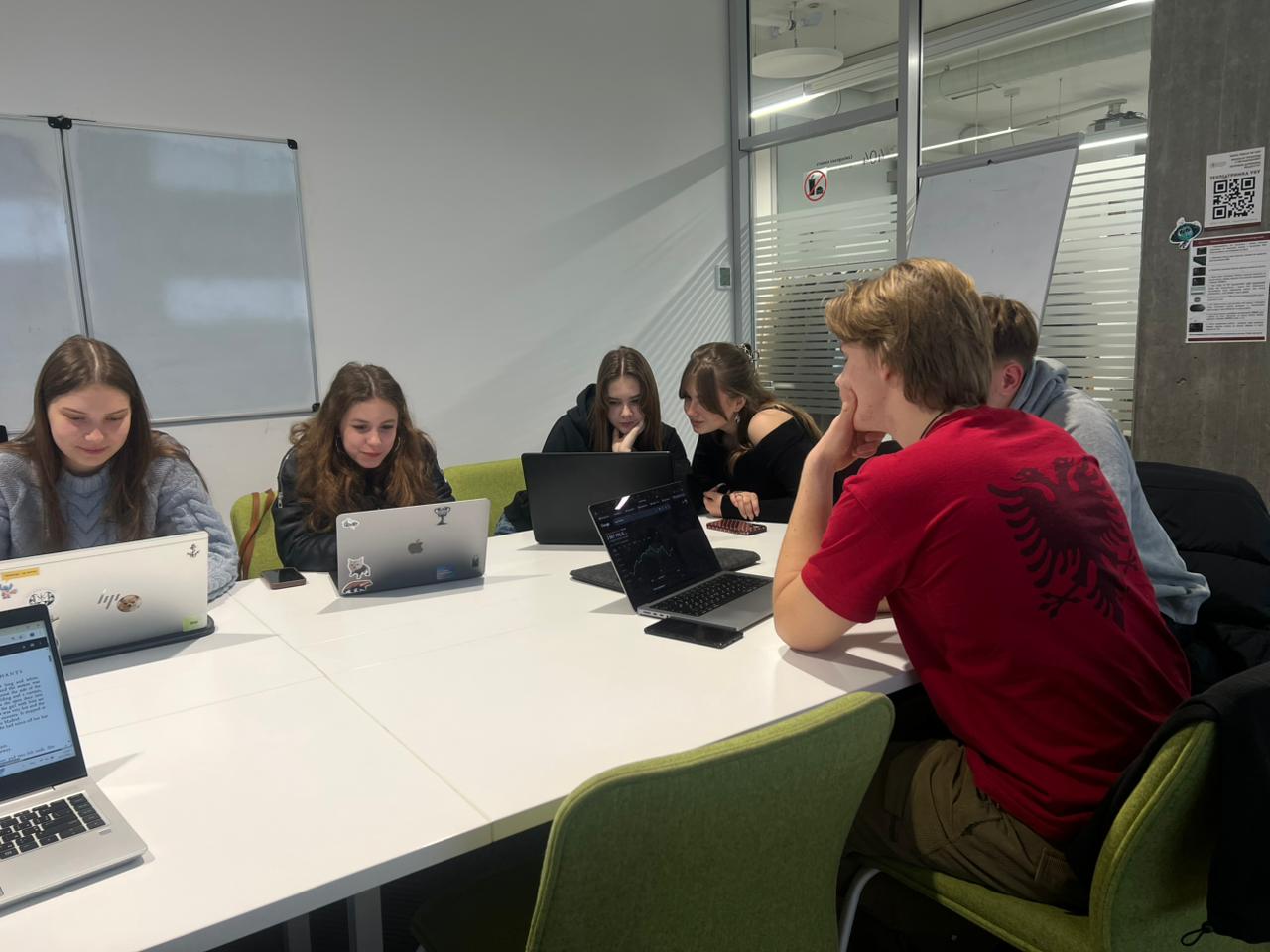
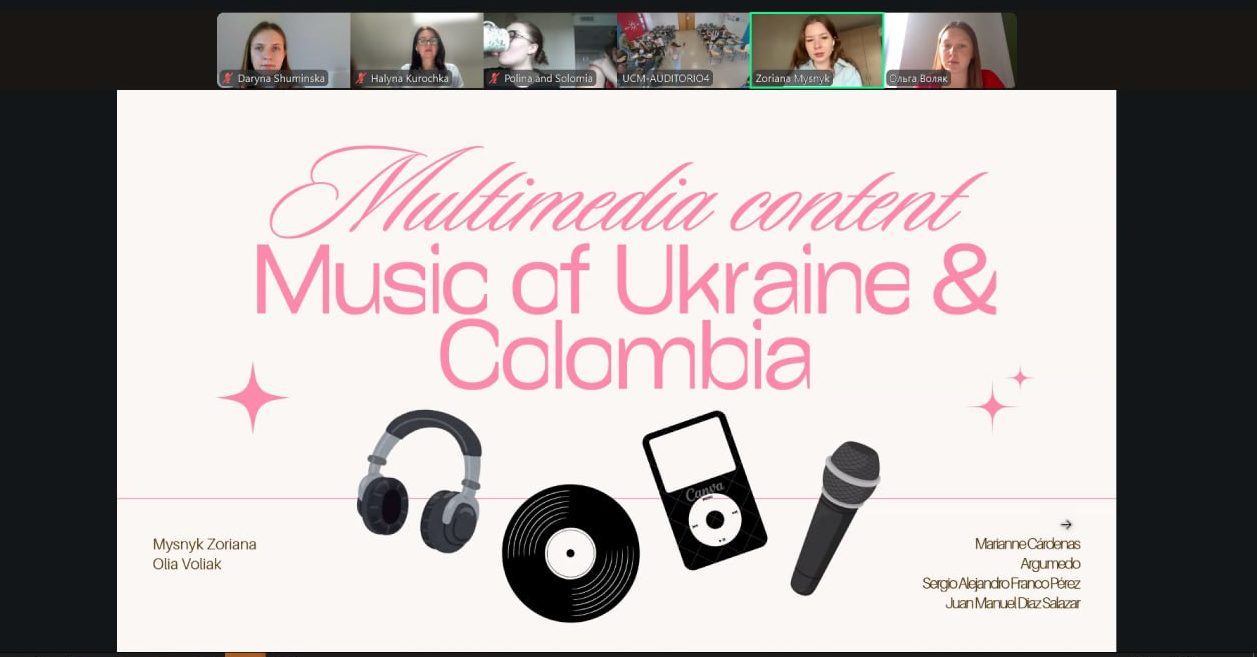
The course brought together 18 students from the Ukrainian Catholic University and 21 students from Colombia, representing different faculties. The first joint meeting began with two presentations by the instructors, who introduced their cities and universities. After that, students were assigned research topics using a randomizer, with the option to adjust them as needed. The course was structured into four stages. During the first stage, students presented a research plan and roadmap and designed a questionnaire. Next, they presented the survey results using the same questions at both universities and analyzed the similarities and differences in the responses. Topics included student life, holidays and religious traditions, relations between neighboring countries, art, and more. Students created charts and tables and presented their findings. In the following session, they shared their observations regarding the results, and the final meeting was devoted to video presentations.
One noticeable difference concerned English proficiency, which shaped group dynamics, as UCU students tended to take the lead in presentations. Ukrainian students, many of whom were first-year undergraduates, felt a strong sense of responsibility to represent Ukraine to the world.
“My students felt they had an important mission: to speak about Ukraine and make it visible,” Halyna Kurochka explains.
Cultural differences also became apparent in everyday academic practices.
In Colombia, classes began at 7:00 a.m., which surprised the Ukrainian students. Ukrainian first-year students observed differences in academic regulations, especially the flexibility Colombian students appeared to have for travel or family visits during the semester.
“Our first-year students generally demonstrate a high level of diligence and responsibility. Variations in age and academic status may explain this difference, as the Colombian students were upper-level and therefore subject to different academic expectations,” shares Halyna Kurochka.
For many participants, the course went far beyond improving English skills.
“My students were immediately excited when they learned they would take part in a COIL course,” says Halyna. “Their English was already strong, and this gave them a chance to use it in real communication, not just as something learned at school.”
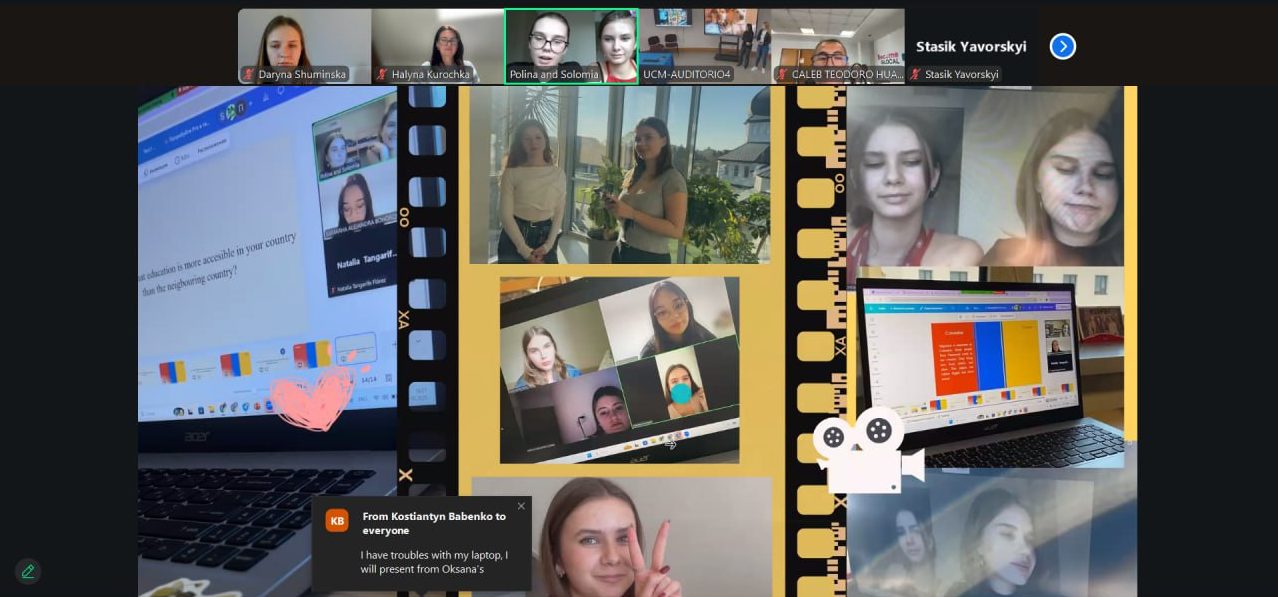
Students developed skills in communication, teamwork, leadership, and time management, working toward shared goals in an international setting. Many expressed a desire for more time, more meetings, and more opportunities to interact informally and work in different groups. Both Ukrainian and Colombian students felt that 80 minutes per session was not enough for such rich interaction.
One of the most meaningful outcomes of the course was the formation of personal connections. Some students continue to communicate and stay in touch via Instagram. The experience also had a broader ethical and civic dimension.
“I tell my students that they have done something significant,” Halyna reflects. “At a time when the war is often presented through competing or distorted narratives, direct human connection is powerful. When students come to know Ukrainians personally, they, and frequently their families, are more likely to develop a more informed and empathetic understanding of the war and to see Ukrainians as real people rather than abstract figures.”
Juan Carlos Vinasco echoes this sentiment:
“Participating in the COIL course was a highly enriching and motivating experience. It confirmed that global collaboration strengthens not only academic skills but also empathy, curiosity, and understanding of diverse perspectives.”
He also emphasized the value of cooperation with Ukrainian colleagues:
“Working with our Ukrainian partners was truly rewarding. Despite time differences and cultural diversity, communication was smooth, professional, and warm. Their resilience and enthusiasm inspired both my students and me.”
Colombian students expressed a desire for more opportunities to discuss the war and learn about everyday life in Ukraine, as well as student life in particular. Overall, feedback was very positive, especially regarding interaction with such a geographically distant culture. Students discovered that they shared similar ways of thinking, developed leadership skills, and expressed a strong desire for more meetings and informal interaction.
As Halyna Kurochka notes, “To be honest, the project also helped broaden our awareness of a region. We tended to orient ourselves toward Europe, Britain, North America, etc., drawing inspiration from their educational systems and cultural contexts. This course showed us how much we actually have in common with Colombia. Listening to the students’ presentations allowed us to discover and gain a deeper understanding of the country.
They come from a warm country and are joyful and lively. It was interesting to learn about their internal conflicts and social tensions.”
As Halyna notes, “Juan Carlos was very open to collaboration, and working with him was both enjoyable and inspiring, particularly because of his extensive experience with COIL-format projects.”
“This partnership shows that when two academic communities come together with respect and purpose,” Juan Carlos concludes, “they can create powerful learning experiences that go far beyond the classroom.”
For both institutions, the collaboration demonstrated how education can foster peace, promote dialogue, and cultivate global citizenship. Discussions are already underway about organizing a joint Global Talk in the next semester, further strengthening ties between UCU and UCM.
Reference
The BRIDGE project is implemented with the financial support of the International Renaissance Foundation, whose grantee is the Ukrainian Catholic University. We are grateful for your trust and support for the development of global education.
The views expressed in this material are solely the responsibility of the authors and do not necessarily reflect the official position of the International Renaissance Foundation.