

Слава Ісусу Христу!
Дорогі студенти,
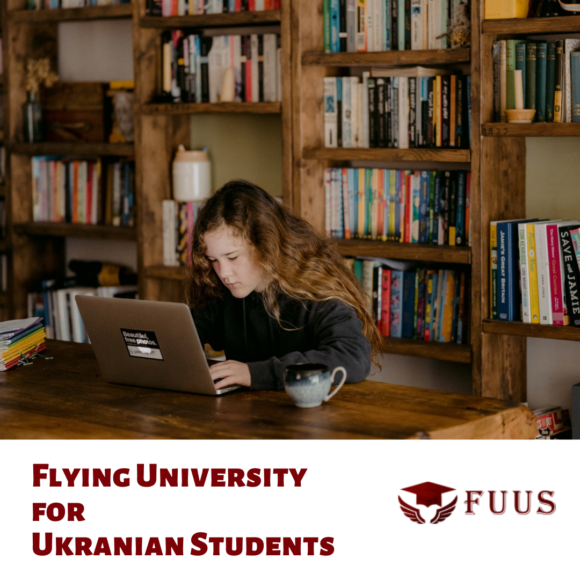
у рамках програми “Flying University for Ukrainian Students” (FUUS), яка допомагає українським студентам, ми пропонуємо вашій увазі безкоштовні тематичні онлайн – курси англійською мовою, де є можливість вдосконалити письмо та говоріння з американськими професорами та іншими студентами з різних вищих навчальних закладів України. Нижче ви можете переглянути описи курсів та розклади.
Описи курсів та розклади
- Myth vs. History: Thucydides’ Revolutionary Study of War
Introductory meeting: January 14; Class meetings by Zoom on January 15-18, 16:30- 18:00 Kyiv
Prof. Louis Rose, Modern History, Otterbein University
Through his account of the Peloponnesian War between Athens and Sparta (431-404BC), the ancient writer Thucydides transformed the study of war and redefined the study of the past. To this day, his work acts as a starting point for the political and historical interpretation of conflict. As a narrator of contemporary events, Thucydides grounded his account of the war in his observations as a participant on the battlefront, as an eyewitness at the home front, and eventually as an exile. As an interpreter of the dynamics of war, he analyzed the political links between international and domestic tensions and between foreign and civil wars. Finally, as a student of the past, he stressed the significance of the underlying causes of war that led to the immediate occasion for the outbreak of conflict. In his use of identifiable sources, his attention to political conditions, and his focus on the meaning of past behavior and decisions, Thucydides applied a historical approach that openly challenged the mythic framework within which ancient Greeks viewed their world. This seminar explores the tools, practices, and ideas with which Thucydides confronted myth with history. It relies on five selections from his work, digital copies of which will be provided to students prior to the class. At the end of the seminar, we will reflect on the extent of Thucydides’ success in his fight against myth and on the continuing relevance of that fight.
- Government Information and Democratic Government
Class meetings by Zoom on January 15, 16, 18, and 19, 17:00-18:30 Kyiv
Prof. Barry Sullivan, Law, Loyola University Chicago
What does it mean to be a citizen in a democratic society, and what do citizens need to know about the government`s activities to do their work as citizens? Similarly, that government information must be made available to opposition parliamentarians? Democratic government requires an informed citizenry and parliamentary opposition, but no government can function with perfect transparency. We will explore historical and contemporary efforts to accommodate these conflicting necessities.
- Orwell in Asia
Class meetings by Zoom on January 11, 12 and 15, 16, 19:30-21:00 Kyiv
Prof. Jeffrey Wasserstrom, History, University of California-Irvine
George Orwell’s links to and relevance for Europe are obvious: he was quintessentially English, wrote about the poor in Paris, fought against Franco in Spain, and his Animal Farm and Nineteen Eighty-Four are often read as critiques of Soviet Communism. This course will show, however, that his links to and relevance for Asia are just as rich a topic. He was born in India and wrote stories and essays about his time as a colonial policeman in Burma. In recent times, journalists have regularly used the term “Orwellian” to describe China and North Korea and Thailand’s most important rap group titled a song “Big Brother” to show contempt for that country’s junta. This course will combine discussion of Orwell’s life and the afterlives of his two best known books, while also placing his dystopian fiction beside other works in the genre created in or applied to politics in Asia.
- Reading Byron’s Don Juan through the Siege of Ismail
Class meetings by Zoom on January 15, 16, 17, 18, 17:00-18:30 Kyiv; optional welcome meeting on January 14, 17:00 KyivProf. Peter Manning, English, Stony Brook University
We speak of Byron’s Don Juan as a single work, but it was written over several years and published serially. The works publishing history inflects our reading because installments written later and under different circumstances offer both continuity and the possibility of new perspectives. Cantos VI-VIII, introduced by a sharp prose preface and focused on the Siege of Ismail by Russian forces in 1790, and followed by Juan’s experiences at the court of Catherine the Great in Cantos IX and X, present the most dramatic of these swings. Such Russian conquest is of obvious pertinence today, and within the poem, it bridges from Byron’s indirect account of his childhood and marriage cast as that of the boy Juan in Spain to a deeper confrontation with the English society that had left in 1816 and the politics of post-Napoleonic Europe. These are the levels and twists we shall track in our readings and discussions.
- Psychology of Men and Masculinity
Class meetings by Zoom on January 15, 16, 17, 18, and 19, 17:30-19:00 Kyiv
Prof. Darryl Hill, Psychology and Women, Gender, and Sexuality Studies, College of Staten Island and the Graduate Center, City University of New York
This course will review recent scholarship on the psychology of men and masculinity offering a critical interrogation of “positive” conceptions such as: “meninist” empowerment, critical positive masculinity, a celebration of men’s bodies, “male femininities,” and male sexual practices in the digital age. We’ll read a few articles, listen to a few podcasts, you’ll read and annotate these sources, and we’ll discuss them in class.
- The Trial of Joan of Arc
Class meetings by Zoom on January 16, 17, 18, and 19, 17:00-18:30 Kyiv
Prof. Winnifred Sullivan, Law, Indiana University BloomingtonJoan of Arc was burned at the stake in 1431. Accused of heresy and war crimes, she was feared by both the French and English kings. We will focus primarily on the trial of condemnation in the context of fifteenth century religion, law, and politics, as well as later religious, legal, cinematic, literary and political lives of Joan. Who was Joan? Who is she? Can we separate her from the legend? Was she a victim of the church or the state?
- The Falls of the Roman Empire
Class meetings by Zoom on January 15, 16, 17, 18, 18:00-19:30 Kyiv
Prof. James O’Donnell, History, University of Arizona
The Roman Empire fell many times. This course will discuss four pivotal moments that can be taken as dates for Rome’s fall. The connecting theme will be the deeper question of what it means to claim that a political, social, and cultural monolith has “fallen”. The dates in question will be 476 CE (end of the reign of Romulus Augustulus), 1453 CE (Constantine XI Palaeologos), 1917 CE (Nicholas II), and 1922 CE (Mehmed VI Vahideddin).
- Modernities
Class meetings by Zoom on January 14, 17:00-18:00 Kyiv Introductions; January 15- 18, 17:00-18:30 Kyiv
Prof. Nancy Condee, Film & Media Studies, University of Pittsburgh
The seminar is organized around three questions: 1. When did modernity “begin” (and how would we know)? 2. Is modernity a Western phenomenon (as we have been taught) or are there other narratives that would end up provincializing this story? 3. What are modernity’s recurrent features across time and space? The seminar looks at readings from Foucault, Anderson, Jameson, Giddens, Gellner, Appadurai, and others.
- Gulliver’s Travels as a Colonial Narrative
Class meetings by Zoom on January 16, 18, 23, and 25, 18:00-19:30 Kyiv
Prof. Gene Hammond, Writing & Rhetoric, Stony Brook UniversityGulliver’s Travels, written in 1726 by Jonathan Swift, is not only one of the masterpieces of World Literature but one of the first trenchant critiques of European colonialism. It begins as a good-humored children’s travel book, but then slips gradually into a detailed critique of the psychology and the deceptive and callous tactics of those in power. Class discussion concerning modern analogues to the descriptions Swift offers will be encouraged. Students should complete the reading of one of the four “Books” of Gulliver’s Travels (about 60 pages each) for each class. If time permits, we will spend part of each class on tips for writing professional-quality English.
Зареєструватися на курси можна за цим посиланням – https://www.flying-university.
Метою FUUS є підтримка українських студентів, яким війна перешкоджає навчанню. Онлайн-курси англійською мовою будуть проводитимуться на безоплатній основі видатними професорами з американських університетів та коледжів США. Студенти-учасники зможуть:
✓ поглибити свої знання з актуальних та академічно значущих тем;
✓ дізнатися про інші культури та встановити інтелектуально продуктивні контакти з іншими українськими студентами та американськими викладачами;
✓ підвищити свою компетентність у використанні академічної англійської мови.
Якщо виникають додаткові питання – звертайтесь (dshuminska@ucu.edu.ua) !