This year, my course, English Through Cultures, became something much bigger than an English class. It became a space where students not only learned about other cultures but also discovered new ways to speak openly, thoughtfully, and with genuine passion about their own.
From the very beginning, the idea behind the course was simple: while learning English, students would also learn how to communicate culture. They explored traditions, identities, and perspectives from around the world while trying to answer an equally important question: How do we speak about Ukraine to people who know very little about it?
What made the course truly special was the students themselves. They responded enthusiastically to every activity, discussion, and challenge. Whether it was an international discussion, collaborative online work, or research-based presentations, they approached everything with creativity, curiosity, and responsibility. Many students later admitted that the course was not easy but deeply engaging, pushing them to work harder, think more critically, and become more confident in expressing their ideas.
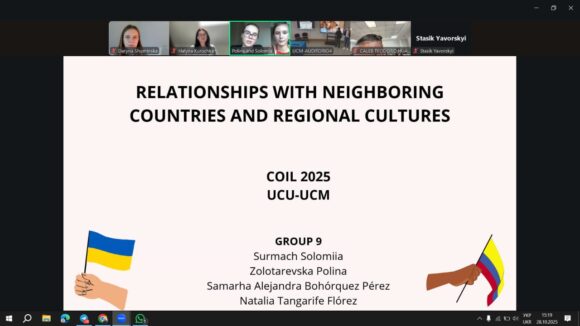
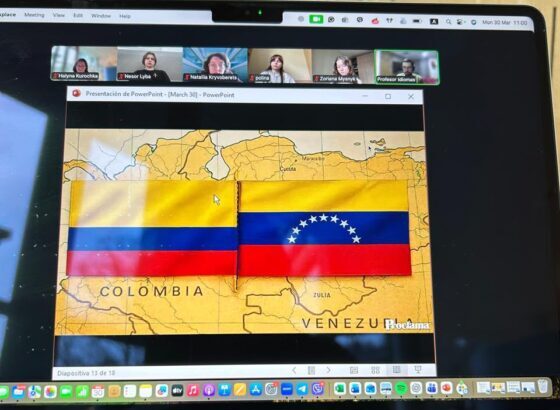
One of the meaningful experiences of the year was participating in a COIL with the University of Manizales. Colombia (Collaborative Online International Learning). Through this international collaboration format, students worked with peers abroad, learned more about Colombia, and introduced Ukraine to people whose understanding of the country was often shaped almost entirely by headlines about war.
COIL combines academic learning, intercultural communication, and digital interaction, enabling students to gain international experience without physical mobility. More importantly, it teaches students to listen, explain, collaborate, and meaningfully represent their culture.
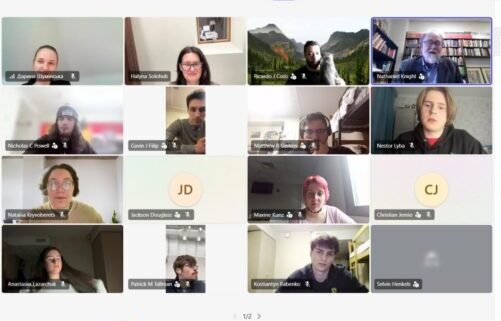
Another memorable part of the course was participation in Global Talks together with Seton Hall University. These meetings allowed students to discuss important topics with an international audience and pushed them to look deeper into their own history and culture. Many students admitted that preparing for these conversations motivated them to learn more about Ukraine so they could speak not only confidently, but insightfully.
The final assignment culminated the entire course. Students prepared presentations on topics connected to Ukraine. These were the subjects they personally cared about and wanted others to understand better. Some spoke about Ukrainian cinema, folk traditions, feminism in Ukrainian history, Euromaidan, or the meaning of “home” for Ukrainians today. Others introduced lesser-known cultural phenomena and regional histories that rarely receive international attention.
To make the experience more authentic, professors and students from Seton Hall University were invited to attend the presentations. Students later admitted that knowing they would present to an international audience motivated them to work harder because they felt they were representing not only themselves, but also their university and their country.
The projects went far beyond ordinary classroom presentations. Students conducted independent research, worked with reliable sources, created meaningful visuals, and even recorded interviews with people connected to their topics. Their goal was not simply to present information, but to engage the audience, make them emotionally invested, and encourage them to learn more about Ukraine.
The presentations left a strong impression on the international guests. A.Misiura commented: “Excellent presentations, students proved the quality of UCU once again.”
Jessica Wilson, who attended the session, shared her impressions: “I am thoroughly enjoying all the presentations. The students are creative, wonderful, smart, and excellent representations of their progress and of your colleagues’ teaching. So creative and well-presented! I am very proud of all of them!”
In the end, English Through Cultures became much more than a language course. It became a place of dialogue, discovery, and connection, a place where students learned that speaking English can also mean telling the story of who you are and where you come from.
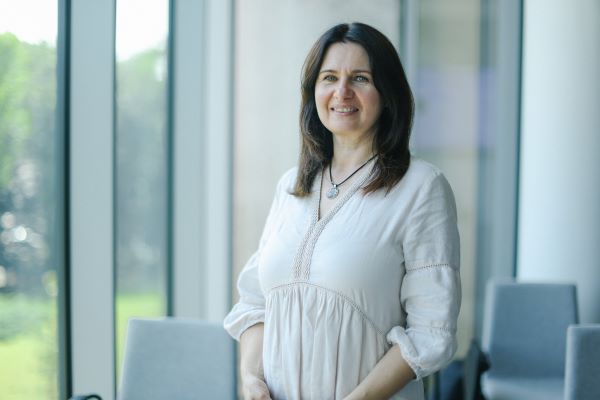
Halyna Kurochka
Head of the Center for Modern Foreign Languages
Ukrainian Catholic University